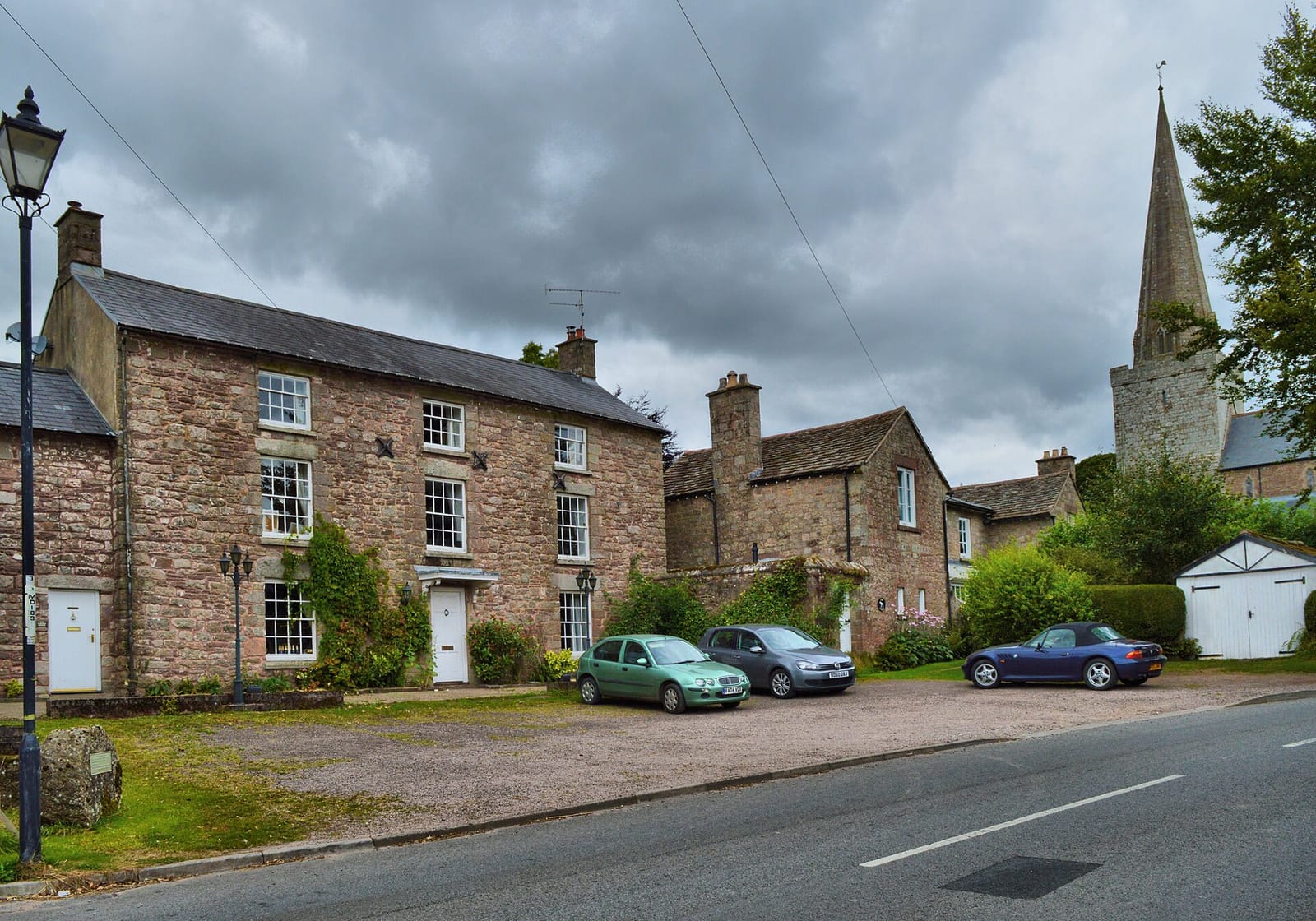
Trellech
Standing stones and a lost medieval town on the hill.
Photo: Philip Pankhurst / CC BY-SA 2.0, via Wikimedia Commons
Trellech sits on the hills above the Wye gorge and was, briefly in the 13th century, one of the largest towns in medieval Wales before it dwindled to a village. It keeps three prehistoric standing stones — "Harold's Stones" — that give it its name, and wide views over the surrounding country.
Staying near Trellech
An elevated, rural base above the valley with more space and bigger views than the riverside villages, and Monmouth and Tintern both a short drive away.
What's here
Harold's Stones and the "Virtuous Well"; the large medieval church; the walks over the hills towards the Wye gorge; and the archaeology of the buried medieval town.
When to visit
Spring to autumn for the walks and views; a quiet base in any season.
See what's available in Trellech
This opens a filtered search for hot tub properties around Trellech. We don't hold availability ourselves — it's the same search you'd run, just pre-filtered.
Browse Trellech propertiesIf you book through this link we may earn a small commission, at no extra cost to you.
Common questions
What are Harold's Stones at Trellech?
Harold's Stones are a row of three tall, leaning standing stones on the edge of Trellech, dating from the Bronze Age. They give the village its name (loosely "three stones") and are among the notable prehistoric monuments of the Wye Valley area.
Was Trellech ever a large town?
Yes — in the 13th century Trellech was one of the largest towns in medieval Wales, an industrial and market centre, before decline and plague reduced it to a village. Archaeological work in the surrounding fields has explored the remains of this "lost" town.